
👀Insider Trading: A Guide (part 1)
Winning with high confidence whale trades

🚨 The Insider-Trading Standard
I have a simple goal for this stage of flow evolution: I will know we have reached the ideal when the SEC comes knocking.
I do not want to cast a wide net into the ocean anymore. I want the signals to be so loud that the assumption is we must be insider trading.
Insider trading does not look like one large floor order. You will probably get hedged.
It also does not look like one tiny order sitting absurdly far outside the money that barely squeaks through the screener. Following that $8,000 order sitting 32% outside the money because someone called it a whale? Congratulations—now you and the whale are both doing a small-account challenge.
It is not anything heading directly into earnings, either. Earnings flow is filled with hedges, volatility trades, spreads and people positioning for both outcomes.
And it is definitely not mega-cap flow. Trading NVDA “whales” while the entire index is moving with it is not a whale-hunting skill set. That is usually index momentum wearing a whale costume.
So what does insider trading actually look like in flow?
We have selected two picks so far for 200% and 300% in two and three sessions respectively; Whale Hunters need to understand what they are hunting. You are not primarily looking for buyouts, M&A activity, partnerships, random headlines or some giant surprise announcement.
Most profitable whale hunting comes down to one of two things:
A. Price upgrades. More flow plays than people realize eventually explode because of analyst upgrades. Why? Because one upgrade brings attention, attention brings more upgrades, and more upgrades bring more institutional buying.
B. Nothing. That is right—the majority of true bangers have no meaningful public news at all. Institutions begin targeting certain tickers, and the whales appear to know where the money is heading or leacving before everyone else does. That is how you get runners like the ones we had today.
💎 CBRS: 300% from entry price, +17% Underlying Today
More than +20% since Friday’s entry
Entry level: 160
Price two sessions later: 205
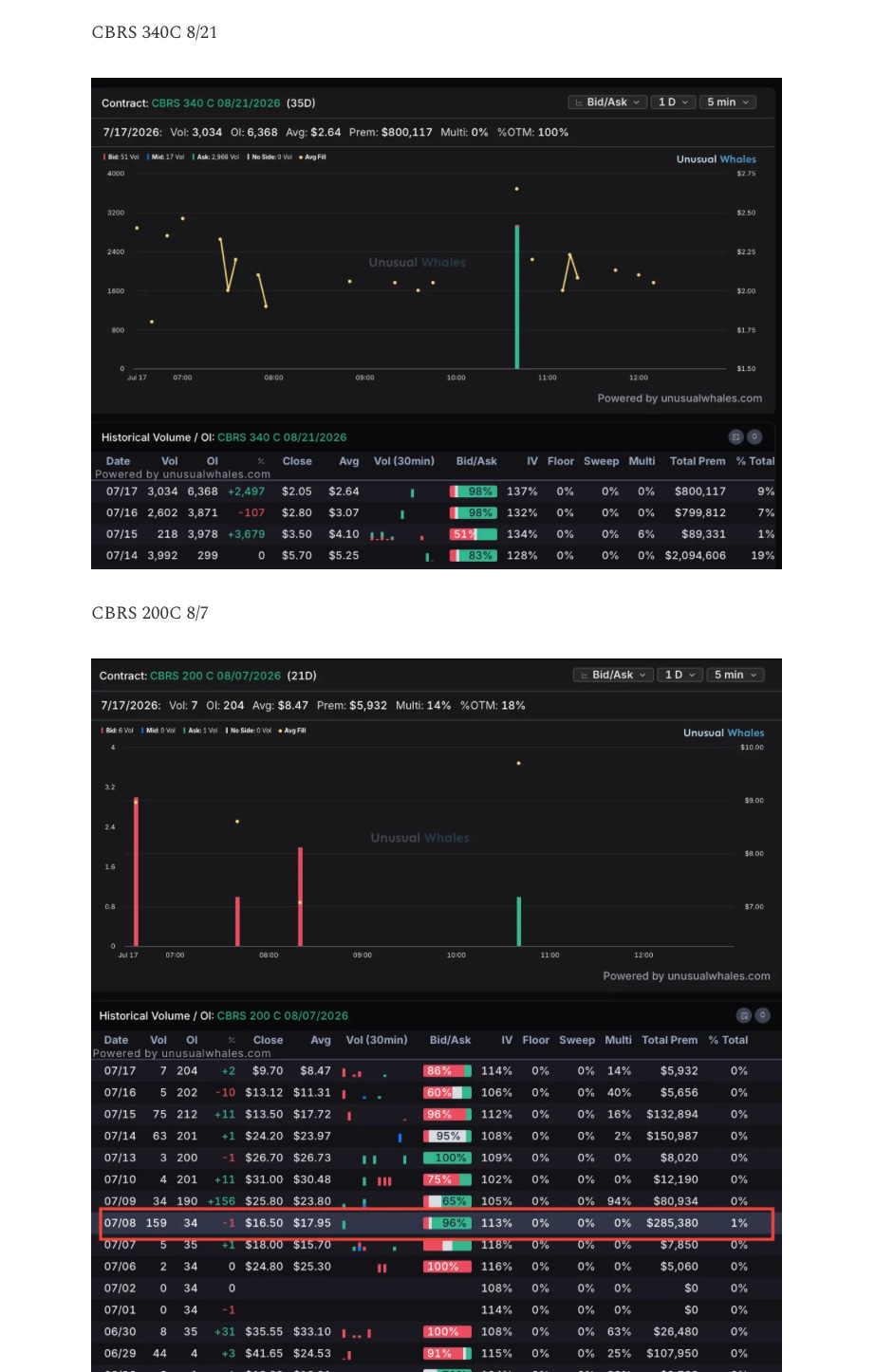
The important part was not one random call order. CBRS had multiple contracts targeting August, including different expiration dates and far-out-of-the-money strikes.
That creates what I call an Expiration Perimeter.
The whales were not making a vague bet that CBRS might eventually go higher. They were repeatedly targeting a specific near-term window with several contracts surrounding the move.
The two August contracts shown here were joined by two additional August contracts in the YEET Plus section. Multiple strikes, multiple expirations and one concentrated time frame—that is the signal.
💎 NBIS: 200% from post, +15% Today
Approximately +8% yesterday
Originally alerted Thursday
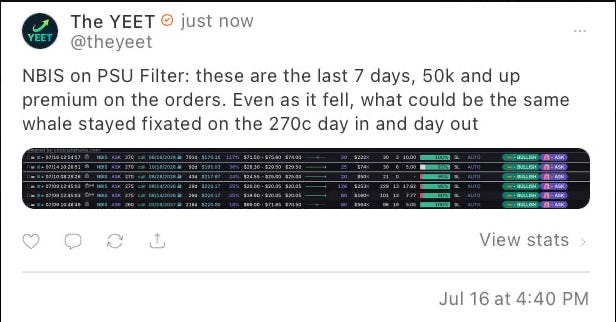
The whales jumped our intended gap entry, but the message was still obvious: this ticker was preparing to run.
The insider move here was Index and Price Inversion.
When the index is sliding but whales continue loading calls in one individual ticker, that is a major hint. The broader market is weak, yet someone is aggressively buying upside exposure in a name refusing to act weak.
That is exactly the kind of separation the BAT Filter is designed to find.

How do we know it was not hedging?
The number of whale contracts, the spread-out expirations and the complete absence of put contracts to muddy the picture.
There was no balanced structure. There was no meaningful downside protection showing beside the calls. It was repeated, aggressive buying.
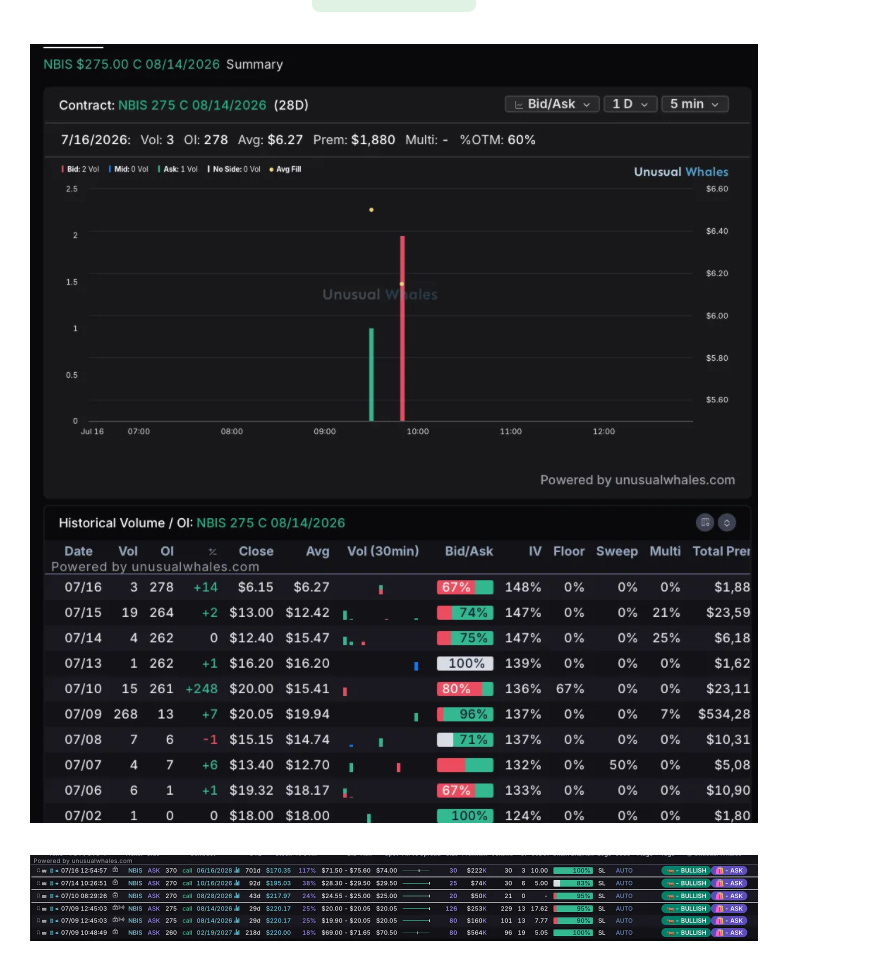
That is what we are hunting now—not every unusual order, not every oversized print and not every ticker with a whale emoji attached to it.
We want the ones where the flow is so coordinated, so persistent and so difficult to explain that it looks like somebody already knows what is coming.
YEET Plus: the follow up to NBIS and CBRS